|
Rome,
the Jewish Ghetto
There has been a Jewish community in Rome
since the 1st century B.C. In imperial times about 30,000 Jews lived and
worked in Trastevere, just across the river from the city proper. After
the fall of the Roman empire the population of the city diminished
drastically. The number of Jews decreased, too, but they continued to play
an important part in the economy of Rome.
In the Middle Ages the Jewish community
moved to the eastern bank of the Tiber. At about the same time, the first
signs of discrimination began to appear. In 1215 a law was passed obliging
Jews to wear a yellow beret or shawl so that they could be easily
distinguished. Hostility towards the community gradually increased,
reaching its height in the 16th century, during the period of the
Inquisition. In 1555 Pope Paul IV confined all the Jews of Rome to a small
area which became known as the Ghetto, taking its name from the Jewish
quarter of Venice. High walls were built around it and a curfew was
imposed.
For three centuries, over 4,000 people
lived and worked on this tiny scrap of land. They built high tenements on
the river bank, but during the frequent floods the lower floors had to be
evacuated. Living conditions were unhygienic in the extreme. Jewish
citizens were allowed to trade only in rags and second-hand goods or to
work as tailors. Only after the Unity of Italy in 1870 did the Jews
finally acquire equal rights.
Soon afterwards, most of the old
buildings of the Ghetto were demolished. The old synagogue, housing the
Cinque Schole where different Jewish rites were celebrated, was left
standing, but not for long: it was destroyed by a fire in 1893. Now the
area is occupied by a school, a splendid new synagogue (inaugurated in
1904) and other buildings dating from the turn of the century.
Many Jewish families chose to remain in
the area. Some had already opened shops in the streets nearby; there were
kosher butchers and bakers close at hand. Now when Romans speak of the
Ghetto they refer to the whole area that lies between Via delle Botteghe
Oscure and the river, which includes some interesting sights.
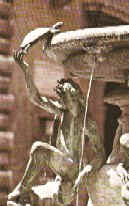
Piazza Mattei has an attractive
16th-century fountain, the Fountain of the Turtles. Via S.
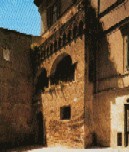
Ambrogio gives a good idea of what the old ghetto must have been like.
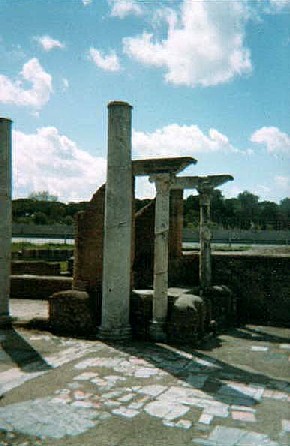
The Portico d'Ottavia was erected by the emperor Augustus in honor
of his sister Octavia.
Some of its columns were incorporated into the church of Sant'Angelo in
Pescheria, which takes its name from the fish market which used to be
held here (pesce means fish). In the 17th and 18th century the Jews
were forced to come to this church on Saturday afternoons to listen to a
sermon. (It is said that many of them put wax in their ears to avoid
hearing the words of the priest.)
There are several restaurants in the
Ghetto area which serve Jewish-Roman food (not always kosher). Typical
dishes are Fritto misto vegetale (Mixed vegetables fried in
batter), Filetti di baccal�; (Fried cod fillets) and Carciofi
alla Giudia (Artichokes in the Jewish style).
|